
Mode: configuration.maxDiffDesign = "standard"
Demo survey: SV_yYzxH3QcNOdAYm0k · respondent link /s/2horBxGZZDeJ
What it is#
The classic balanced MaxDiff design. Every item is shown roughly the same number of times, co‑occurrence is varied (pair‑balancing), and any configured suppression pairs are never shown together. It does not use the R model. It is also the fallback the Top‑N Bandit uses before the model has run.
Configuration used#
| Setting | Value |
|---|---|
| Design of Experiment | Standard |
| Number of screens | 6 |
| Items per screen | 4 |
| Items | 8 (Price, Quality, Brand reputation, Design, Eco‑friendly, Warranty, Customer support, Delivery speed) |
| Constraints | none |
How it builds each screen#
For every slot it picks the least‑exposed item so far (primary key), breaking ties by least co‑occurrence with items already on the screen, skipping constrained partners.
Why the first screens look like they aren't randomized#
Because exposure is the primary key, every item appears once before any item appears twice. With 12 items at 4 per screen, screens 1–3 cover the whole list before anything repeats. That is the design working correctly, not a missing shuffle — equal exposure is what keeps the utility estimates unbiased. Which items land together on each screen is still random within that constraint.
Each respondent gets their own rotation#
The design seed combines the question with the respondent's session id, so no two respondents see the same arrangement of screens, order, or positions — while every individual still gets perfectly even exposure. It stays deterministic within a session, so resume and back‑navigation rebuild the same screens. Preview uses a fixed session id so authoring stays stable.
Constraints#
Item pairs that must never share a screen are authored in the question's Constraints panel and
stored as configuration.maxDiffSuppressionPairs. The builder runs this same design as you edit
and warns when the constraints are too tight to fill a screen. See the
MaxDiff guide.
Live run — the 6 screens shown#
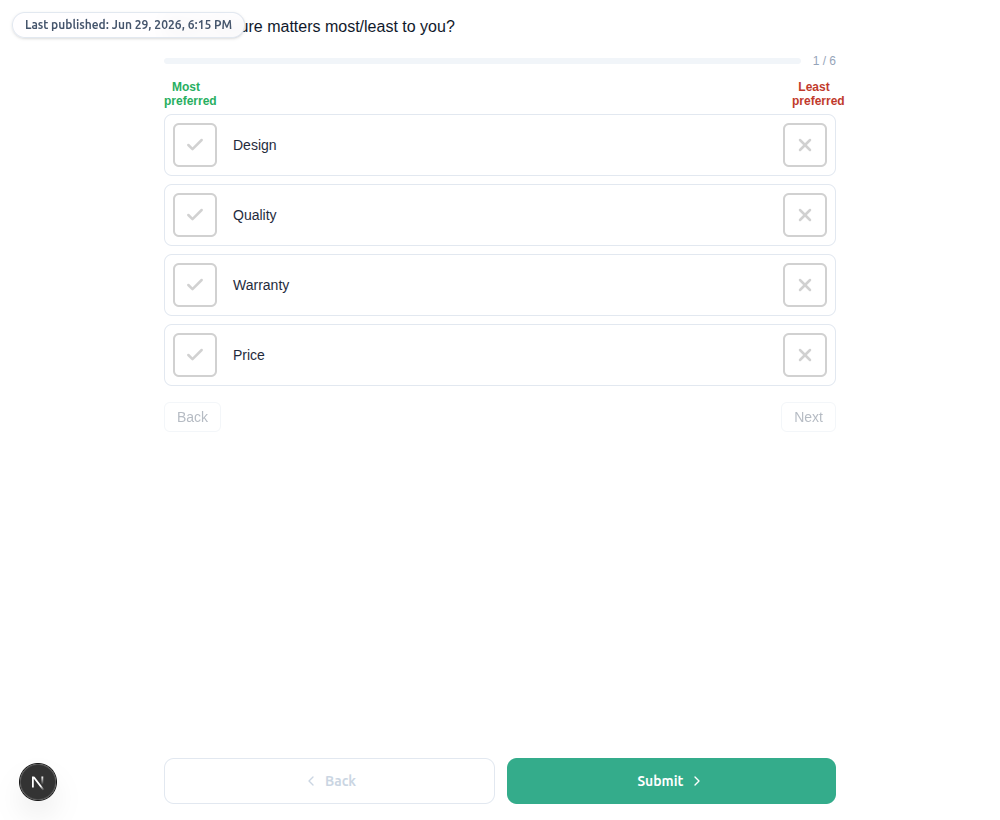
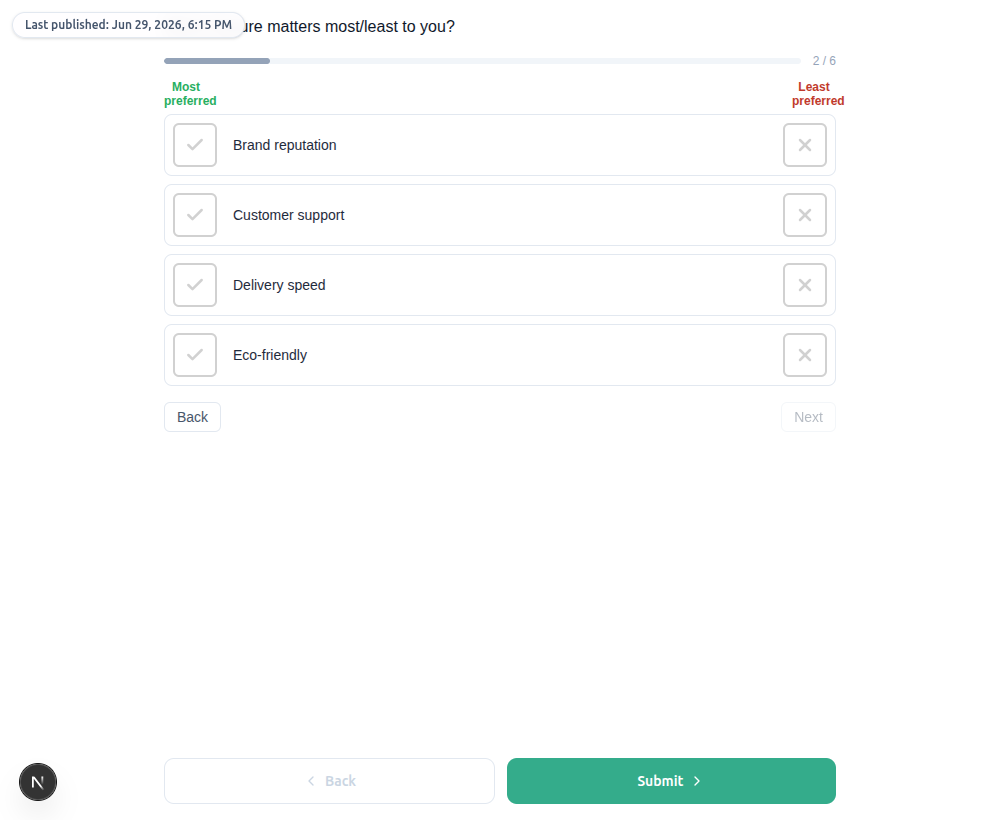
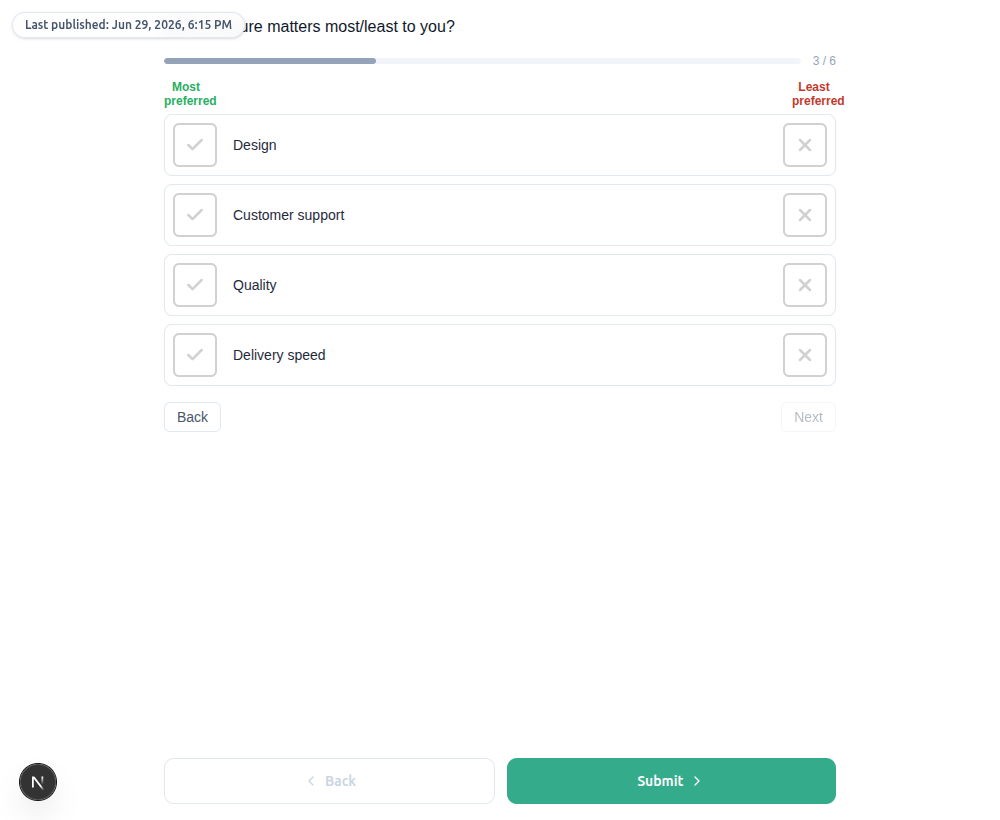
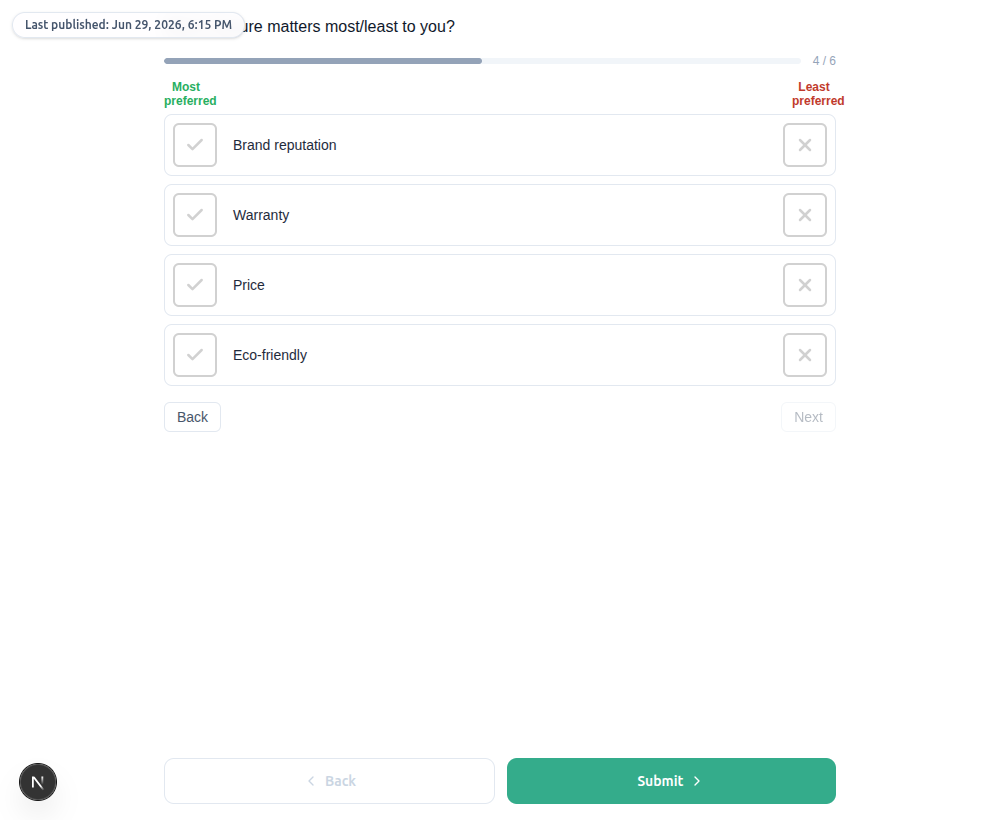
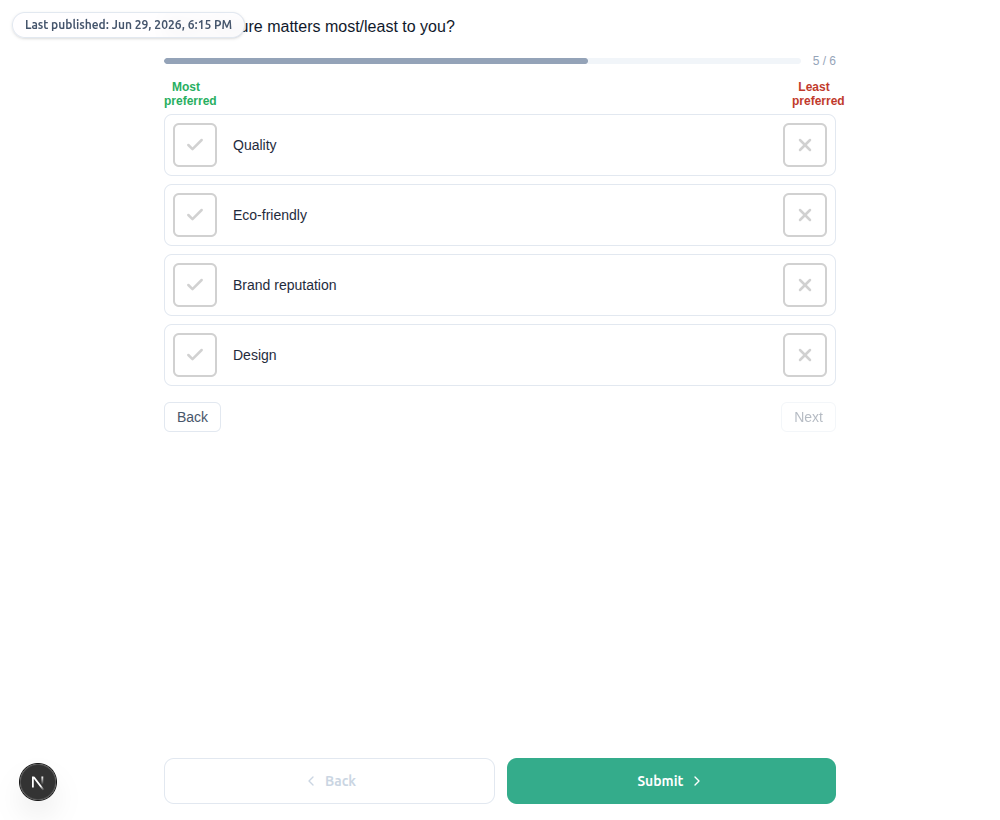
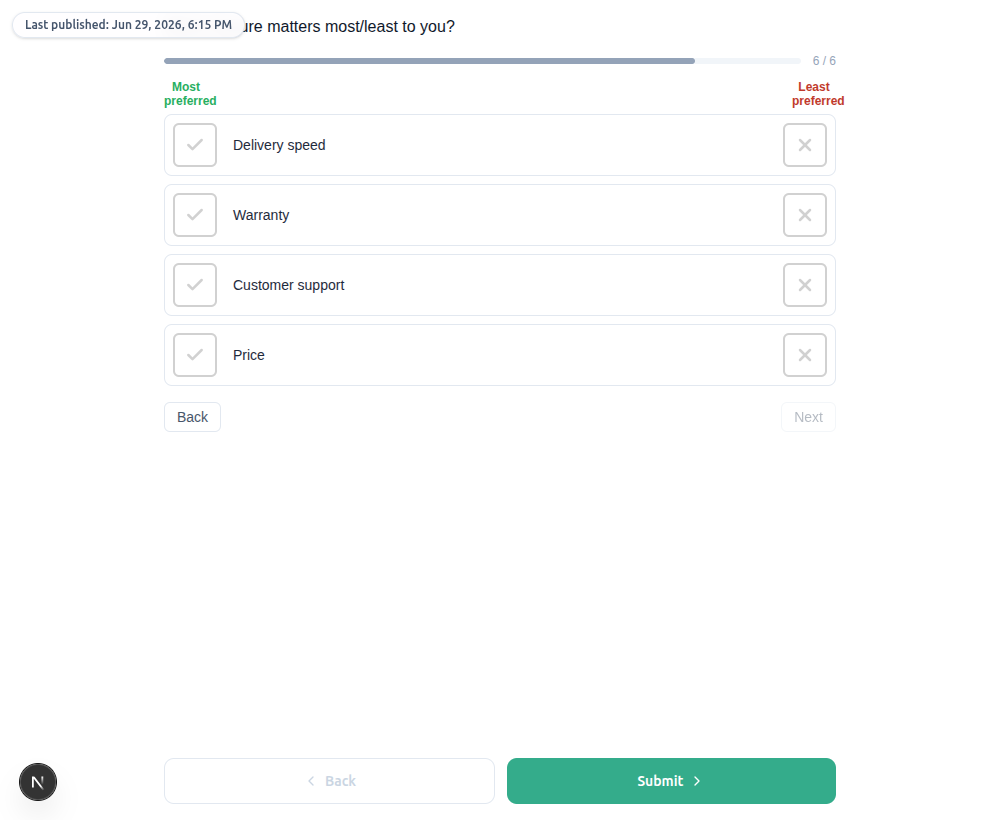
One respondent's rotation. A different respondent gets a different arrangement with the same exposure balance.
| Screen | Items shown |
|---|---|
| 1 | Design · Quality · Warranty · Price |
| 2 | Brand reputation · Customer support · Delivery speed · Eco‑friendly |
| 3 | Design · Customer support · Quality · Delivery speed |
| 4 | Brand reputation · Warranty · Price · Eco‑friendly |
| 5 | Quality · Eco‑friendly · Brand reputation · Design |
| 6 | Delivery speed · Warranty · Customer support · Price |
Result — exposure is perfectly balanced#
| Item | Times shown |
|---|---|
| Price | 3 |
| Quality | 3 |
| Brand reputation | 3 |
| Design | 3 |
| Eco‑friendly | 3 |
| Warranty | 3 |
| Customer support | 3 |
| Delivery speed | 3 |
max − min exposure = 0 — every item appeared exactly 3 times across the 24 slots (6 screens × 4). This is the defining property of the Standard design: unbiased, equal coverage for every item.
Was this page helpful?